


Case Study - IDRF - Ramadan Project 2022 - Kiron

Purpose of Case Studies |
Case studies are an excellent tool used in the monitoring and evaluation of a project. IDRF requires a minimum of two case study submissions per reporting period to highlight some of the unique experiences and stories of IDRF’s project beneficiaries. A case study is more than a simple reiteration of the services a beneficiary received under a specific project. A case study should tell a unique story of a beneficiary and should demonstrate the effectiveness and impact of a project in addressing specific challenges outlined in the project agreement. A case study should explain the short and long-term benefits a beneficiary received as a participant of an IDRF project. Overall, case studies involve looking at one experience in-depth and showing how this experience relates to the broader picture.
When structured, developed, and written correctly, a case study should engage the reader by clearly describing the situational context and the challenge(s) faced by a particular beneficiary. It highlights the importance of the current project and why there is a need for such programming. When shared through social media, case studies are extremely useful in raising awareness about specific global issues and encourage the reader to act and learn more about a project.
Developing Case Studies |
There are many ways to develop and structure a case study. For this project, a case study should be framed as a story having three main components: (1) a main character; in this case, the main character would be a project beneficiary, (2) a problem; this should include a description of the challenge(s) experienced by that beneficiary, and lastly (3) a solution; the solution should be a description of how that beneficiary’s participation in this project improved or mitigated the identified challenges.
Case Study Framework |
As previously stated, the purpose of a case study is to inform, engage and mobilize the reader to take action, learn more and remain engaged in the project and the work of the organizations involved. The purpose of this document is to provide a framework for all case study submissions ensuring consistency and compliance with IDRF reporting requirements.
Please note: Case study submissions are required at all scheduled reporting periods outlined on the payment and reporting schedule of the project agreement. Each case study should be accompanied by a minimum of two high-resolution, full-length JPEG photo attachments. Please DO NOT copy and paste pictures into this template as this affects the quality of the photos. Please complete the following framework by providing a minimum of two case studies per reporting period.
CASE STUDY 1 | |
Project Title | Ramadan Food Support for Vulnerable Rohingya and Host Population in Bangladesh. |
Country | Bangladesh |
Region(s) | Dhaka Division, Rajbari District, Pangsha Upazila. |
Sector | Food Security and Nutrition |
Project Beneficiary | Indicate the [name] and [age] of the beneficiary featured in this case study. kiron (Male), age 12 years |
Challenges experienced by beneficiary | Describe the unique challenges faced by the beneficiary specific to the project sector. [Please include this information in point form]
|
Project impact | Describe the how this project improved or mitigated the challenges identified by the beneficiary. Please describe the short-term and long-term benefits of this project. [Please include this information in point form]
|
Completed Case Study (minimum of 2 paragraphs) | Insert the completed full-length case study.
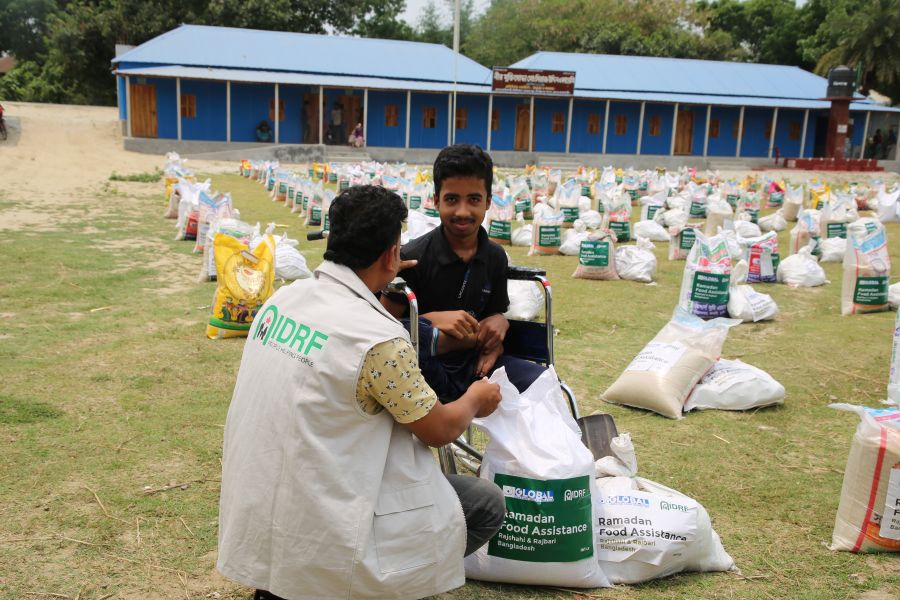
Kiron’s dreams were broken when he came to know about his sudden disability. His legs were numb and now he won’t be able to move on his own. Kiron is 12 years old boy who read in grade six. His father is a farmer. With his limited income, he managed to admit his son in school. But the disability also brought an extra financial burden to his father’s shoulders. It is getting hard to bear all the necessary medical costs and equipment to make Kiron’s life a little easier. Kiran has two other elder brothers who also are students. Kiron can realize, raise of the commodity price is accelerating the challenges his father is facing to cope with the current situation. Kiron has not given up his dream. He wants to be a service holder. He wants to contribute to his family and reduce the burden on his father. He will feed the delicious food to his family members who they dream to have. But with this little income from his father, it is difficult to fulfill his nutritional need. He can concentrate on his study with an empty stomach. “ I don’t know how I will continue my study with such disability and malnutrition”. In April 2022, Global Unnayan Seba Sangstha selected some beneficiaries during Ramadan under a project funded by IDRF. Kiron was one of the beneficiaries. Guss has provided rice, oil, salt, sugar, onion, date, spice, Shemai, etc. By getting that Kiran was very happy. After a long time, he would have such dessert. His joy knew no bound. “I and my family will be able to eat with joy for a month with those foods. Thank you IDRF” said Kiran. During this Ramadan, many children and fasting people are facing tremendous problems in Rajbari. The soared-up community price and unemployment due to Covid 19 have exacerbated the suffering of poor people. The relief has helped the beneficiaries to have a pleasing life at least for the rest of the month of this Ramadan. |
Beneficiary Quotation #1 | Include a direct quotation from the beneficiary describing the unique challenges experienced by the beneficiary.
“ I don’t know how I will continue my study with such disability and malnutrition” |
Beneficiary Quotation #2 | Include a direct quotation from the beneficiary describing the positive impact of the project in relation to the challenges described above.
“I and my family will be able to eat with joy for a month with those foods. Thank you IDRF” |
Media | Provide a brief description of the case study pictures provided. Please ensure each case study is accompanied by a minimum of two pictures featuring the beneficiary participating in the project activities. The pictures were taken during distribution. Pictures are attached as Annex-6 |